The Spice market outlook: How branding, pricing, and distribution shape competitive strategies
With the rising demand for food consumption and the diversification of culinary trends, the spice industry has experienced significant growth, attracting both domestic and international businesses. Major corporations such as Unilever (UK), Ajinomoto (Japan), Miwon (Taiwan), and Nestlé (Switzerland) have already invested in the Vietnamese market. However, local enterprises still play a vital role, for example, Masan Consumer currently holds the leading share in the domestic market.
Local businesses are under pressure from strong global brands and fluctuations in consumer demand. Therefore, competition is no longer limited to product quality but also extends to brand positioning strategies, pricing, and marketing channels. To stay competitive, businesses should build a solid brand image, optimize pricing, and develop a cohesive distribution system.
1. Current landscape of the spice industry
Vietnam’s spice industry has been making remarkable progress in the international market, driven particularly by the strong growth in export value. In 2024, although pepper export volume declined by 5.1%, total export revenue still reached USD 1.318 billion, marking a 45.4% increase compared to the previous year, thanks to a nearly 50% rise in export prices.
Other spices, such as chili and cinnamon, also recorded positive growth, reflecting rising global demand. Moreover, the global spice market is projected to grow at a CAGR of 5.24% by 2029, opening up significant opportunities for Vietnamese enterprises to expand their market share worldwide.
1.1. Consumption trends in the spice industry
Consumer preferences in the spice industry have undergone significant changes, reflecting shifts in eating habits, growing health awareness, and technological advancement. Spices are no longer seen merely as flavoring ingredients but are now associated with nutritional value, sustainability, and global culinary experiences. The following trends are shaping the spice market in the coming years:
- Natural, organic, and clean-label spices are gaining popularity as consumers seek products free from preservatives and artificial additives. Items certified as organic, non-GMO, or carrying clean-label tags are increasingly dominating retail shelves.
- E-commerce has become a key distribution channel, with online spice sales rising sharply, particularly in the Asia–Pacific region. Platforms such as Amazon, Shopee, and Lazada are bridging the gap between producers and consumers, especially for regional specialty or imported spices.
- Health-oriented is emerging as a strong growth segment amid the rising focus on wellness. For instance, turmeric powder (rich in curcumin) is known for its anti-inflammatory benefits, cinnamon helps regulate blood sugar, while black garlic is valued for boosting immunity.
- Technology integration in production and supply chain management enables better demand forecasting and process optimization. Leading brands like McCormick have adopted AI to develop new spice blends based on market data, while blockchain technology is used to ensure traceability, transparency, and product quality throughout the global supply chain.
1.2. Challenges in the spice industry
Despite its strong growth potential, the spice industry faces several challenges that could affect competitiveness and sustainability in the coming years.
- Quality control and traceability: Ensuring consistent quality and clear origin of spices remains a major concern. Many small-scale producers still lack standardized processing, drying, and packaging methods, leading to uneven product quality and difficulties in meeting international standards such as HACCP or ISO.
- Price fluctuations and supply chain instability: Spice prices are highly sensitive to climate conditions, harvest yields, and geopolitical factors. Unpredictable weather patterns and rising transportation costs have caused significant volatility, particularly in key commodities like pepper, cinnamon, and chili.
- Strict import regulations:
Major import markets such as the U.S., EU, and Japan impose rigorous requirements regarding pesticide residues, microbial contamination, and product labeling. Vietnamese exporters, in particular, must invest more in testing, certification, and compliance to avoid shipment rejections. - Limited branding and value-added processing:
Most spice exports from Vietnam remain in raw or semi-processed forms, with low brand recognition and limited value-added products. Developing branded spice lines, blended seasonings, and ready-to-use products could enhance market competitiveness. - Sustainability and ethical sourcing:
As global consumers increasingly prioritize sustainability, the demand for ethically sourced and environmentally friendly products is growing. However, implementing sustainable farming practices and transparent sourcing remains a challenge for many producers in developing regions.
2. Comprehensive competitive strategy in the spice market
In an increasingly dynamic and competitive spice market, product quality alone is no longer enough to ensure sustainable advantage. The key question for businesses now is: How can they optimize their strategy and stand out from competitors?
2.1. Positioning Spice Brand Value for Differentiation
Brand positioning is the process of defining a brand’s place in consumers’ minds, establishing recognition in the market, and setting it apart from competitors. In the spice industry, brand positioning is reflected through product quality, brand image, communication messages, and the unique value a product delivers. The following key factors are essential for effective spice brand positioning:
- Define core values: A strong brand must be built around distinctive core values that create differentiation. For example, McCormick emphasizes purity and premium quality, while Simply Organic focuses on organic origins and health-conscious benefits.
- Understand the target market: Effective positioning starts with a deep understanding of the target audience. For premium segments, brands should highlight ingredient origins, production quality, and elegant packaging. Conversely, for mass-market consumers, affordability and widespread availability are critical.
- Craft a unique brand story: Modern consumers are increasingly drawn to the story behind the product. A spice brand can build strong emotional connections by emphasizing traditional heritage, unique production methods, or a commitment to health and sustainability. For instance, Dh Foods differentiates itself by offering authentic Vietnamese spices free from artificial colors and preservatives, ensuring both trust and local identity.
2.2. Customized pricing strategy
Pricing strategy plays a decisive role in determining profitability, shaping brand positioning, and defining customer reach within each target market. A well-designed pricing model helps businesses optimize revenue while maintaining competitiveness.
Rather than adopting a fixed pricing approach, companies should remain flexible, adjusting prices in response to market dynamics, customer behavior, and competitor reactions. Striking a balance between profitability and operational costs is essential. Therefore, pricing decisions must consider product characteristics, customer demand, and market competition.
- Cost-based pricing: This approach sets prices by adding a profit margin to the total production, distribution, marketing, and storage costs. It is straightforward and ensures profitability without requiring extensive market research. However, if companies ignore market benchmarks or customer perceptions, products may end up overpriced or undervalued, reducing competitiveness.
- Competitive pricing: This method involves analyzing competitors’ prices to determine whether to price at, above, or below market levels. For brands lacking strong differentiation, lower pricing can help attract customers and expand market share. Conversely, if a product offers superior quality, premium packaging, or unique sourcing, businesses can charge higher prices, provided they communicate this added value effectively through marketing.
- Value-based pricing: Instead of relying solely on costs or competitors, this strategy focuses on the price customers are willing to pay based on perceived value, brand reputation, or exclusivity. For instance, an organic spice brand may set a higher price due to its clean ingredients, chemical-free processing, and eco-friendly packaging. To make this strategy effective, companies must clearly convey their product’s core value through marketing, helping customers understand why the premium is justified.
2.3. Optimizing distribution channels
The distribution system directly impacts a company’s ability to reach customers and the speed of market expansion. Optimizing distribution channels allows businesses to control costs, maintain profitability, and ensure a stable supply.
Therefore, in an increasingly competitive environment, it is essential to carefully evaluate distribution models, such as direct, intermediary, or multi-channel approaches to determine the most suitable strategy. At the same time, leveraging technology in supply chain management enhances operational efficiency, minimizes risks, and maximizes competitive advantage.
- Market and target customer analysis: Identify areas with high demand and understand customer purchasing behavior to select the most appropriate channels. For example, younger customers tend to shop online, while traditional customers prefer agents or physical stores.
- Diversifying distribution channels: Combine direct channels (stores, agents) with indirect channels (e-commerce platforms, websites, social media) to optimize market reach. This approach enables businesses to leverage existing customer bases while expanding into potential markets.
- Operational management and optimization: Monitor inventory, delivery times, and the shopping experience across each channel to ensure operational efficiency. Businesses should consider implementing technology in supply chain management to reduce waste and optimize cash flow.
- Monitoring, evaluation, and adjustment: Regularly measure the performance of each channel using metrics such as revenue, costs, and conversion rates. Based on this data, businesses can reallocate resources or adjust distribution strategies in line with consumer trends.
2.4. Product development and innovation
A strong distribution system directly influences a company’s market reach, customer accessibility, and growth pace. Optimizing distribution channels enables businesses to control costs, maintain profitability, and ensure a stable supply chain.
In an increasingly competitive environment, companies must carefully evaluate various distribution models, direct, intermediary, or omnichannel, to identify the most effective approach. At the same time, integrating technology into supply chain management enhances operational efficiency, reduces risks, and maximizes competitive advantage.
- Market and customer analysis: Identify high-demand areas and study consumer purchasing behaviors to choose the right channels. For example, younger consumers often prefer online shopping, while traditional buyers tend to favor physical stores or local distributors.
- Channel diversification: Combine direct channels (retail stores, agents) with indirect ones (e-commerce platforms, websites, social media) to maximize reach. This approach allows businesses to maintain existing customer bases while expanding into new potential markets.
- Operational optimization: Monitor inventory levels, delivery times, and customer experience across all channels to ensure seamless performance. Implementing digital solutions for supply chain management helps reduce waste, streamline logistics, and optimize cash flow.
- Performance tracking and adjustment: Regularly measure the effectiveness of each channel through key metrics such as revenue, cost, and conversion rate. Based on these insights, companies can reallocate resources or refine their distribution strategy in line with evolving consumer trends.
3. Case study: Competitive Strategy of a Spice Industry Brand
In Vietnam’s spice market, Dh Foods has built a strong reputation for offering clean and natural seasoning products free from preservatives, artificial colors, and MSG. The brand focuses on delivering authentic Vietnamese flavors that reflect the nation’s culinary identity while meeting consumers’ increasing demand for safety and quality.
Challenges
- Fierce competition from major players: Market leaders such as Masan Consumer, Ajinomoto, and Vedan dominate Vietnam’s spice industry, generating tens of trillions of VND in annual revenue with extensive nationwide distribution networks.
- High profit margin pressure: Masan, for example, maintains a gross profit margin of nearly 50%, creating significant challenges for smaller companies seeking to optimize costs and sustain profitability.
- Limited scale and resources: Large corporations benefit from strong capital, advanced technology, and established distribution systems, leaving small and medium enterprises to find innovative ways to compete in a market largely controlled by these industry giants.
Strategic Solutions
- Brand visibility: Dh Foods leveraged Shark Tank Vietnam to boost brand awareness and enhance consumer trust, with the CEO actively engaging in media appearances to strengthen brand image.
- Product differentiation: The company positions itself as a provider of “clean spices” — free from artificial additives — targeting health-conscious consumers rather than competing on low prices.
- Distribution expansion: Dh Foods products are widely available in major retail chains such as Co.opmart, Big C, VinMart, and Aeon Mall, and the company has successfully penetrated international markets including Japan, Korea, the U.S., and Europe.
- Digital presence: The brand capitalizes on e-commerce platforms like Shopee, Lazada, and Tiki to expand reach among modern consumers, while ensuring product quality through clean sourcing, traceability, and compliance with international food safety standards.
- Continuous innovation: Dh Foods consistently diversifies its product portfolio to meet evolving consumer tastes and broaden its market coverage.
Results
Thanks to its differentiated product strategy and effective distribution management, Dh Foods has secured a strong foothold in Vietnam’s spice market, earning the trust and loyalty of domestic consumers while competing successfully against established brands.
The company has achieved remarkable growth, selling approximately 1.2 million units per month. Its 2021 revenue reached 144.2 billion VND, marking a 51.6% increase from 2020, and continued to rise to 180 billion VND in 2023, up 14% year-on-year. Impressively, Dh Foods has maintained an annual growth rate exceeding 50% for six consecutive years.
4. GLEADS: Comprehensive digital solutions for enhancing spice brand competitiveness
In the increasingly competitive spice market, how can a brand stand out and earn customer trust? GLEADS offers comprehensive digital marketing solutions that help spice businesses not only enhance brand awareness but also optimize distribution channels and boost overall business performance.
4.1. GLEADS’ strengths in the spice industry
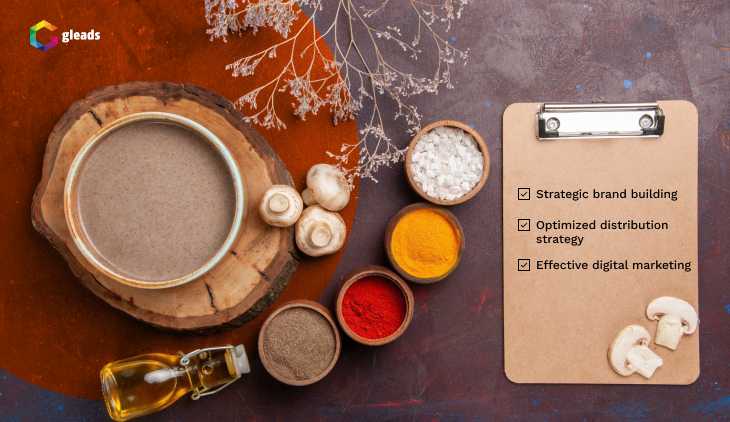
- Strategic brand building: GLEADS helps businesses establish clear brand positioning by highlighting core values such as premium ingredients, unique blending formulas, or advanced production processes.
- Optimized distribution strategy: We support spice companies in expanding their presence across e-commerce platforms and developing multi-channel sales strategies to effectively reach target customers.
- Effective digital marketing: By combining SEO, digital advertising, and social media marketing, GLEADS increases brand visibility, attracts potential buyers, and improves conversion rates.
4.2. Key GLEADS Services for Spice Businesses
- Website SEO optimization: We conduct in-depth keyword research relevant to the spice sector, enhance website structure, loading speed, and user experience to improve search rankings and help consumers easily discover products.
- Digital advertising (PPC): GLEADS manages Google Ads and social media campaigns with compelling content and precise audience targeting, ensuring cost-efficient results and maximum ROI.
- Content strategy development: We craft engaging, story-driven content that communicates brand values, showcases product highlights, and integrates multimedia formats such as images and videos to boost awareness and drive purchase intent.
Looking ahead, Vietnam’s spice industry is expected to continue expanding both domestically and globally. Innovation in production, brand strategy, pricing, and distribution will be the key to achieving sustainable growth and competitive advantage.
GLEADS empowers spice businesses with integrated, data-driven marketing solutions designed to strengthen visibility, expand market reach, and accelerate success.
Contact GLEADS today for a comprehensive digital strategy consultation!
Related Articles

The global international education market is becoming increasingly competitive, marked by the rapid rise in the number of schools and growing expectations from parents. According to ISC Research, by 2024, there were more than 14,000 international schools worldwide, serving 6.9 million students and generating USD 60.9 billion in annual tuition revenue. Notably, Vietnam has witnessed […]

As Vietnam enters 2025, the government continues to roll out policies promoting digital transformation — creating favorable conditions for businesses to unlock new market opportunities. This year marks a pivotal moment for the tourism industry, setting the stage for Vietnam to achieve its vision of becoming a leading economic sector by 2030. Amid this digital […]

The rapid rise of e-commerce in recent years has driven the beauty and fragrance industry to expand aggressively into online channels. While this shift opens up tremendous growth opportunities, it also intensifies competition. In this landscape, many brands face the pressing question: how can they sustainably increase online revenue without relying solely on paid advertising […]

Across Vietnam — from lush green rice fields to time-honored ancient villages — lie stories of history, tradition, and cultural pride passed down through generations. These values form an invaluable foundation for tourism, helping Vietnam emerge as a distinctive destination on the global travel map. According to the Director General of the Vietnam National Administration […]

According to a recent HSBC survey, Vietnamese parents are willing to allocate nearly 50% of their household spending toward their children’s education. At the same time, the number of international schools in Vietnam has increased by 5% over the past two years, placing the country among the top five globally alongside Japan. This rapid growth […]


