Optimizing Conversion Rates for Tour Bookings and Hotel Reservations on Travel Websites
As Vietnam enters 2025, the government continues to roll out policies promoting digital transformation — creating favorable conditions for businesses to unlock new market opportunities. This year marks a pivotal moment for the tourism industry, setting the stage for Vietnam to achieve its vision of becoming a leading economic sector by 2030.
Amid this digital momentum, many travel companies are accelerating their online transformation, particularly by investing in their websites to align with shifting customer behaviors. However, increasing the conversion rate for tour bookings and hotel reservations requires much more than an attractive website or engaging content. It demands a holistic approach that considers design, user experience, data analytics, and conversion-focused strategies.
So, how can travel businesses effectively optimize their websites to drive more bookings? Let’s explore key strategies that help maximize conversion potential and elevate your brand’s online performance.
Barriers Affecting Travel Website Conversion Rates
The conversion rate is a key metric that directly impacts a travel business’s revenue while reflecting the overall performance of its website. This figure can be influenced by several factors below.
Page Loading Speed
Internet users are often impatient, especially when it comes to page loading time. According to KissMetrics, a 1-second delay in page load time can reduce conversions by up to 7%, and 47% of users expect a website to load fully within 2 seconds or less. These numbers highlight the critical role of loading speed in shaping user experience and online business performance.
Mobile Compatibility
A key goal in Vietnam’s 2021–2030 ICT infrastructure plan (with a vision toward 2050) is ensuring 100% of adults own a smartphone. With the growth of mobile internet and 4G/5G networks, consumer behavior has shifted dramatically, especially toward booking and purchasing via mobile.
Therefore, if a travel website isn’t optimized for mobile devices, businesses risk losing competitive advantages and seeing higher bounce rates, which significantly reduces conversion opportunities.
UI/UX Experience
UI and UX are essential aspects of web design. UI focuses on visuals such as colors, layout, and graphics, while UX emphasizes user convenience and overall interaction experience. According to Forrester, good UI/UX design can increase conversion rates by 200%–400%.
Payment Systems
Payment methods like credit cards, e-wallets, and QR codes are increasingly popular for their convenience and speed. Integrating online payment systems helps improve user experience and reduce cart abandonment. Moreover, investing in secure payment systems builds customer trust and strengthens brand credibility.
User Reviews and Feedback
According to DoubleVerify, 59% of Vietnamese consumers rely on online sources when researching products before purchasing. PowerReviews adds that 77% pay attention to star ratings, and 52% skip products without reviews.
These statistics show that user feedback—especially ratings and reviews—significantly influences purchasing decisions and website conversion rates.
Unconvincing Content
Content shapes how customers perceive your brand, products, and services. Clear, engaging, and persuasive messaging builds trust and emotional connection. When users feel well-informed and confident in a brand’s credibility, they’re more likely to take the next step toward booking or purchasing.
Key Metrics Affecting Travel Website Conversion Rates
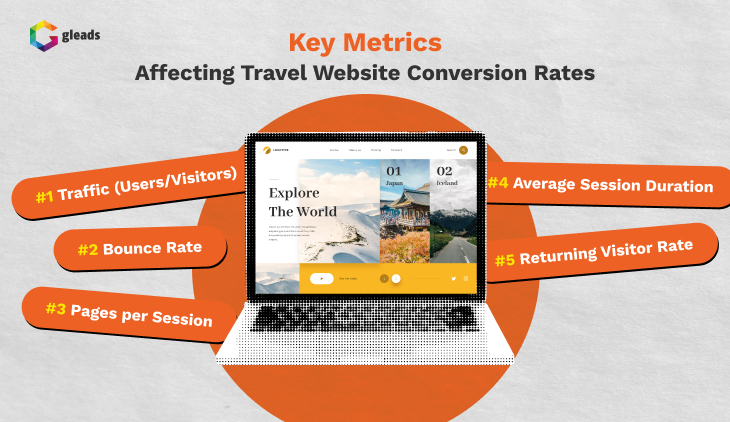
To effectively optimize conversions, it’s crucial to monitor and analyze website performance data. These insights help identify areas for improvement and increase tour bookings or room reservations. You can use tools such as Google PageSpeed Insights, Google Search Console, and Google Analytics to track the following metrics:
Traffic (Users/Visitors)
This metric shows how many people visit your website—similar to counting how many customers enter a store. To increase traffic:
- Optimize SEO to boost organic visits.
- Use paid ads to target precise audiences.
- Leverage social media and travel communities to drive traffic.
- Create high-quality, up-to-date content that aligns with travel trends.
Bounce Rate
Bounce rate measures the percentage of visitors who leave your website without further interaction. It directly affects how Google evaluates your site quality. Improve this metric by:
- Compressing images and optimizing code for faster loading.
- Designing clear navigation and a visually balanced UI/UX.
- Presenting content logically with visuals and videos to sustain interest.
- Testing mobile performance and improving layouts for handheld devices.
- Avoid intrusive pop-ups or only trigger them at the right moment.
Pages per Session
This shows how many pages a visitor views in one session, reflecting website engagement. To improve it:
- Enhance navigation with clear menus, breadcrumbs, and internal links.
- Suggest related content or products.
- Use compelling CTAs and anchor texts to guide users deeper into the site.
- Enrich user experience with immersive visuals and storytelling.
Average Session Duration
This measures how long visitors stay on your travel website. Longer sessions indicate that users find your content helpful and the interface pleasant. To boost it:
- Structure content clearly using headings, bullet points, and visuals.
- Add relevant CTAs and smart internal links to encourage exploration.
- Optimize page speed to reduce waiting time.
- Use multimedia such as videos or high-quality images to bring destinations to life.
Returning Visitor Rate
This metric reflects how valuable and engaging your website is. A high return rate indicates users find your content worth revisiting. To improve it:
- Publish quality, updated content relevant to travel seasons.
- Send engaging email newsletters featuring limited-time travel deals.
- Optimize UX/UI for all devices.
- Create loyalty or member reward programs.
- Use social media and remarketing techniques to deliver personalized content at the right time.
How to Effectively Optimize Conversion Rates for Travel Websites
High traffic but few bookings? A stunning website, but visitors leave too soon? These are common challenges for travel businesses. In this section, GLEADS will walk you through how to solve them all.
Identify Your Target Audience
To optimize conversions, the first step is understanding exactly who your ideal customers are. Without clear audience insights, it’s challenging to create content that resonates, resulting in wasted effort and subpar results. Define your audience by focusing on:
- Demographics such as age, gender, income, occupation, and travel preferences. For example, younger audiences often seek affordable adventure trips, while middle-aged and premium travelers value comfort and relaxation.
- Online behavior, including whether they prefer reading articles or watching destination videos. These insights help tailor content and presentation for better engagement.
- Motivations and needs, which shape purchasing decisions. Some travelers prioritize relaxation, while others crave cultural or nature experiences. While many care about price, others are willing to pay more for quality and exclusivity. Addressing these motivations through visuals and messaging builds emotional connection and drives conversion.
Evaluate Website Structure
An optimized travel website must be both visually appealing and frictionless, allowing users to easily find information and book services. To enhance conversions, regularly assess your website’s layout and performance to identify areas for improvement.
- Test UI/UX: Ensure clear design, intuitive navigation, and a logical menu system. The homepage should present key content, and CTAs (Call-to-Action buttons) must stand out. Page speed is crucial — a fast-loading, visually cohesive design makes it easy for users to explore and act.
- Identify areas for improvement: Ensure the site is mobile-friendly, utilizes engaging visuals, and aligns with audience preferences. Tools like Google Analytics, SEMrush, or Ahrefs can help analyze user behavior and site performance for data-driven optimization.
- Implement SEO best practices: Boost your website’s visibility and conversion potential by improving loading speed, optimizing meta tags and URLs, building internal links, and applying Schema Markup based on Google’s algorithm. For detailed steps, refer to GLEADS’ guide: “6 SEO Steps to Get Your Travel Website on Top Search Results.”
Optimize Website Design
When visitors can quickly find what they need without friction, they’re more likely to stay longer — and convert. Focus on these three key design aspects:
- Clear, easy-to-navigate layout: Use intuitive menus, organized service categories, and a functional search tool. Avoid excessive animations or overly complex designs that distract users.
- Colors and visuals aligned with target groups: Bright tones and dynamic imagery appeal to younger audiences, while deeper, elegant hues suit premium travelers. Use authentic, high-quality photos of destinations to spark inspiration and confidence.
- Strategic placement of key information: Highlight tour prices, promotions, and refund policies in visible areas. CTAs such as “Book Now” or “View Offers” should have eye-catching colors, concise text, and strategic placement for maximum engagement.
Enhance Website Content
Your content should inform, inspire, and convert. A well-structured and trustworthy website can dramatically improve conversion rates.
- Use clear, accessible language: Avoid jargon or long-winded phrasing. Keep messages concise but meaningful — especially for tour details, itineraries, and pricing policies.
- Incorporate vivid visuals and videos: Showcase destinations through dynamic media. Authentic photos and immersive videos of landscapes, activities, and traveler experiences create emotional connection and inspire immediate action.
- Leverage social proof: Display achievements like the number of satisfied customers, awards, press mentions, or partnerships. Statistics such as “Over 10,000 happy travelers” or “Top 10 Trusted Travel Agencies” build trust and credibility that accelerate booking decisions.
Build a Smart Advertising Strategy
Reaching the right audience and sustaining their interest is key to conversion.
- Target the right audience: Random ad placements waste budget. Instead, personalize campaigns based on user behavior, interests, location, and spending patterns.
- Use Retargeting Ads: Remind potential customers about your services through personalized offers or destination recommendations. Platforms like Google Display Network help track user behavior and deliver relevant ads. However, balance frequency to avoid overwhelming users.
Continuously Measure and Improve
Website optimization is an ongoing process that requires tracking, analysis, and adjustment to maintain performance.
- Apply A/B Testing: Compare two variations of a webpage or element (color, layout, copy, etc.) to identify which performs better.
- Use analytics tools: Platforms like Google Analytics, Hotjar, and SEMrush provide valuable data to understand user behavior and conversion trends — helping you refine and scale your digital strategy effectively.
Boost Conversions for Your Travel Business with GLEADS
In today’s highly competitive travel industry, having a strategic marketing approach is the key to attracting customers and maximizing revenue. GLEADS provides end-to-end digital solutions designed to help travel businesses optimize conversion rates and achieve sustainable growth.
3 Reasons to Partner with GLEADS
- In-depth tourism expertise: We understand the unique dynamics of the travel industry — from emerging trends to customer behavior — enabling us to craft tailored marketing strategies for each brand.
- Holistic website optimization: From UI/UX design to content personalization, we enhance every digital touchpoint to make it easier for users to book tours or accommodations.
- Comprehensive marketing solutions: Our integrated approach combines SEO, content marketing, PPC advertising, and visual design — ensuring precise audience targeting and cost efficiency.
Our Core Services for Travel Businesses
- SEO: GLEADS helps your travel website rank higher on search engines like Google, boosting visibility, attracting qualified leads, and increasing both traffic and conversions.
- Content Marketing: We develop engaging, audience-focused travel content that stays relevant and up to date with seasonal and market trends.
- PPC Advertising: Our performance-driven campaigns focus on specific objectives — helping you reduce costs while maximizing ROI.
- Design: From brand identity systems to digital creatives, we craft visually compelling designs that clearly communicate your brand message and captivate your audience.
GLEADS’ Professional Implementation Process
Step 1: Research and Market Analysis
We begin by understanding your business goals and analyzing market trends, audience insights, and travel behaviors to develop the most effective marketing strategy.
Step 2: Strategic Marketing Planning
Based on the findings, our team builds a comprehensive travel marketing plan integrating SEO, content marketing, PPC, and design to achieve your specific objectives.
Step 3: Campaign Execution
Once the strategy is finalized, GLEADS executes the campaign with a clear roadmap, ensuring each initiative runs efficiently and cohesively across all platforms.
Step 4: Performance Tracking and Optimization
We continuously monitor campaign performance — from bounce rates and session duration to conversion metrics — and provide periodic reports with actionable insights to maximize results.
Conversion optimization is the cornerstone of long-term business growth. By applying the methods outlined in this guide, your travel brand can deliver a better user experience, increase booking rates, and build a lasting competitive advantage.
With deep expertise in marketing and tourism, the GLEADS team is ready to help your business achieve measurable results. Contact us today to discover the most effective strategy for your travel brand.
Related Articles

The global international education market is becoming increasingly competitive, marked by the rapid rise in the number of schools and growing expectations from parents. According to ISC Research, by 2024, there were more than 14,000 international schools worldwide, serving 6.9 million students and generating USD 60.9 billion in annual tuition revenue. Notably, Vietnam has witnessed […]

The rapid rise of e-commerce in recent years has driven the beauty and fragrance industry to expand aggressively into online channels. While this shift opens up tremendous growth opportunities, it also intensifies competition. In this landscape, many brands face the pressing question: how can they sustainably increase online revenue without relying solely on paid advertising […]
Across Vietnam — from lush green rice fields to time-honored ancient villages — lie stories of history, tradition, and cultural pride passed down through generations. These values form an invaluable foundation for tourism, helping Vietnam emerge as a distinctive destination on the global travel map. According to the Director General of the Vietnam National Administration […]

According to a recent HSBC survey, Vietnamese parents are willing to allocate nearly 50% of their household spending toward their children’s education. At the same time, the number of international schools in Vietnam has increased by 5% over the past two years, placing the country among the top five globally alongside Japan. This rapid growth […]
The financial sector is known for its dynamic nature and growing competitiveness. This constant evolution has prompted many businesses to accelerate their digital transformation, seeking effective strategies to attract and retain customers in an increasingly online world. In this context, Financial SEO has emerged as a key driver — not just an optimization tool, but […]


