How To Optimize Sales Conversion Across Digital Touchpoints
- Why Conversion Optimization Matters in Digital Business?
- Understanding Digital Touchpoints & Customer Journeys
- Paid & Organic Strategies to Maximize Conversions
- Data-Driven Optimization: Key Metrics & A/B Testing
- Leveraging AI & Automation for Smarter Conversions
- Unlock Your Growth Potential with GLEADS
- Conclusion
The modern customer journey is more complex than ever. According to a McKinsey report, brands that excel in personalization across digital touchpoints can increase revenue by 10–30% while those that fail risk losing 38% of customers.1 In the highly competitive digital market, businesses must adapt to evolving consumer behaviors across multiple channels—from social media to e-commerce platforms.
So, why does this matter? Digital touchpoints like websites, paid ads, emails, and chatbots are crucial for influencing purchasing decisions. However, many businesses struggle to optimize these interactions, leading to low conversion rates and fragmented customer experiences. Digital entrepreneurs need a data-driven marketing strategy that seamlessly integrates paid and organic channels while personalizing each customer journey to stay ahead.
Here’s what you’ll learn in this guide:
- The role of digital touchpoints in modern customer journeys.
- Strategies to integrate paid and organic marketing for higher conversions.
- How A/B testing and data analytics drive performance.
- Leveraging AI and automation to improve customer engagement.
- Actionable strategies from GLEADS to scale your business.
Let’s dive in and explore how to turn every customer interaction into a conversion opportunity!
Why Conversion Optimization Matters in Digital Business?
Challenges in Conversion Optimization for Digital Businesses
In today’s fast-evolving digital landscape, businesses face significant hurdles in optimizing conversion rates. One primary challenge is consumer behavior fragmentation—users interact with brands through multiple touchpoints, from social media ads to website visits and email marketing. Yet, many businesses struggle to create a seamless experience, leading to high bounce rates and abandoned carts.
Moreover, companies often lack in-house expertise and resources to leverage data-driven insights effectively. While digital tools and analytics platforms are widely available, their effective implementation requires specialized knowledge—something many businesses fail to invest in. Additionally, high infrastructure costs pose a barrier, especially for SMEs that lack the budget for advanced AI-driven optimization tools.
The Growing Importance of Digital Touchpoints
Market trends indicate that customers no longer follow a linear buying journey. Instead, they interact with brands across multiple platforms—social media, websites, emails, and mobile apps—before making a purchase decision. Businesses that optimize these touchpoints effectively can enhance customer experience, drive engagement, and increase conversions.
Key benefits of optimizing digital touchpoints include:
- Improved Customer Engagement: Seamless interactions across channels ensure customers remain engaged. For example, a well-timed email reminder about an abandoned cart can recapture potential lost sales.
- Higher Conversion Rates: When digital touchpoints provide relevant content and personalized recommendations, customers are more likely to convert. McKinsey reports that businesses with strong personalization strategies can see up to a 30% revenue boost.
- Better Brand Visibility: A consistent presence across multiple touchpoints strengthens brand recall. A brand that actively engages users via social media and targeted ads remains top-of-mind, increasing trust and credibility.
- Data-Driven Insights: Every touchpoint provides valuable customer data. Businesses can analyze behaviors to optimize marketing efforts and refine strategies for higher ROI and long-term growth.
For instance, an e-commerce brand that uses social media ads to attract customers must ensure that visitors landing on their website find a well-structured, easy-to-navigate platform with relevant product recommendations. If the transition from ad to website is disjointed, the chances of losing a potential sale increase. Similarly, an email marketing campaign without a compelling call-to-action or a mobile-unfriendly checkout process will lead to low engagement and lost conversions.
For businesses looking to overcome these challenges and optimize conversions, GLEADS provides a data-driven, multi-channel marketing approach tailored for digital entrepreneurs. With expertise in paid advertising, organic strategy, AI-driven analytics, and conversion rate optimization, GLEADS helps businesses:
✔️ Integrate touchpoints seamlessly for a frictionless customer journey.
✔️ Utilize AI and automation to enhance personalization and engagement.
✔️ Leverage advanced data analytics to identify gaps and refine strategies.
✔️ Implement cost-effective solutions that drive measurable results.
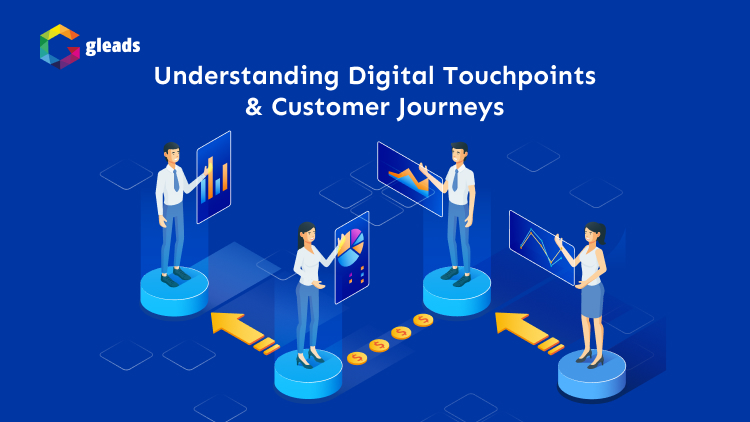
Understanding Digital Touchpoints & Customer Journeys
What Are Digital Touchpoints?
Digital touchpoints are the various interactions between a brand and its customers in the online space. Each touchpoint plays a role in shaping the customer’s perception of a brand. Businesses that strategically optimize these interactions can improve customer satisfaction and retention rates.
Below are common digital touchpoints:
- Website Visits: A brand’s website often serves as the first point of contact. A well-designed, informative, and user-friendly website can significantly impact customer engagement and conversions.
- Social Media Engagement: Platforms like Facebook, LinkedIn, Instagram, and Twitter allow brands to interact with customers, share content, and build relationships.
- Email Marketing: Newsletters and personalized email campaigns help maintain brand presence and nurture customer relationships.
- Paid Advertisements: Display ads, social media ads, and search engine marketing (SEM) attract potential customers and generate leads.
- Chatbots & Live Chat: AI-powered chatbots or human live chats enhance customer support and provide real-time assistance.
- Mobile Apps & Push Notifications: Apps create a seamless user experience, while push notifications keep customers engaged with timely updates and offers.
- Search Engine Results: Organic and paid search results influence how customers discover a brand.
- Online Reviews & Testimonials: Customer reviews on platforms like Google My Business, Trustpilot, and Yelp impact trust and credibility.
- Affiliate & Influencer Marketing: Collaborations with influencers and affiliates can drive targeted traffic and enhance brand awareness.
How Does A Multi-Channel Customer Journey Work?
A multi-channel customer journey optimization refers to the interactions customers have across different digital platforms before making a purchase or engaging with a brand. Unlike a linear sales funnel, modern customer journeys are dynamic, involving multiple digital touchpoints.
Key Stages of a Multi-Channel Customer Journey
- Awareness: Customers become aware of a brand through social media, search engines, or online ads.
- Consideration: Customers evaluate the brand by visiting its website, reading reviews, or engaging with social media content.
- Decision: Customers make a purchase decision, often influenced by targeted promotions, email marketing, or retargeting ads.
- Post-Purchase Engagement: Customer experience after purchase, including follow-up emails, loyalty programs, and customer support.
- Advocacy & Retention: Satisfied customers become brand advocates by leaving positive reviews, referring friends, and engaging with future marketing efforts.
Tools for Optimizing Customer Journeys
- Google Analytics: Tracks user behavior and identifies drop-off points.
- CRM Platforms (Salesforce, HubSpot): Help brands personalize communication and track interactions.
- Heatmaps (Hotjar, Crazy Egg): Show how users engage with website elements.
- Marketing Automation Tools (Marketo, Mailchimp): Automate personalized marketing campaigns.
- A/B Testing Tools (Optimizely, VWO): Test different variations of content and layouts to optimize conversions.
Why Personalization is Key to Optimizing Conversions
Personalization is the practice of tailoring content, recommendations, and experiences to individual users based on their preferences and behavior. It significantly enhances customer engagement and boosts conversion rates.
Benefits of Personalization
- Enhanced Customer Experience: Personalized content makes customers feel valued, leading to stronger brand loyalty.
- Higher Engagement & Conversions: Customers are more likely to interact with content that is relevant to their interests.
- Reduced Cart Abandonment: Retargeting strategies and personalized offers encourage customers to complete their purchases.
- Increased Customer Lifetime Value (CLV): Providing relevant offers and content keeps customers engaged for the long term.
Examples of Personalization in Digital Touchpoints
- E-commerce: Amazon’s recommendation engine suggests products based on browsing history.
- Email Marketing: Personalized subject lines and product recommendations improve email open rates.
- Chatbots: AI-powered chatbots provide tailored responses based on previous customer interactions.
- Dynamic Website Content: Netflix curates content recommendations based on viewing history.
- Loyalty Programs: Starbucks rewards customers with personalized offers based on purchase history.
Implementing Personalization
- Customer Segmentation: Divide your audience based on demographics, behavior, and purchase history.
- Data-Driven Insights: Use analytics tools to track customer interactions and preferences.
- AI & Automation: Leverage machine learning algorithms to deliver personalized content at scale.
- Behavioral Triggers: Send automated messages based on specific user actions (e.g., abandoned cart reminders).
Paid & Organic Strategies to Maximize Conversions

Paid Advertising: Precision Targeting and Cost Optimization
Paid advertising, such as Google Ads, Facebook Ads, and LinkedIn Ads, offers businesses the ability to reach specific audiences based on demographics, interests, and online behaviors. To maximize conversions, consider the following strategies:
- Audience Targeting: Utilize advanced targeting options, including lookalike audiences, retargeting, and customer segmentation. For example, an e-commerce brand can use Facebook Pixel to retarget visitors who abandoned their carts, increasing their chances of conversion.
- Optimizing Click-Through Rate (CTR): Craft compelling ad copy, use high-quality visuals, and test multiple variations (A/B testing) to determine which ads perform best. A well-optimized ad with a clear call-to-action (CTA) can significantly boost CTR.
- Lowering Cost Per Acquisition (CPA): Optimize bidding strategies, improve ad relevance scores, and ensure landing pages are highly relevant to the ad content. For instance, a SaaS company might use Google Ads’ Smart Bidding to automatically adjust bids for maximum conversions at the lowest possible cost.
Organic Growth: Building Sustainable Brand Equity
While paid ads generate immediate traffic, organic strategies ensure long-term success and credibility. Businesses can maximize organic conversions through:
- Search Engine Optimization (SEO): Optimizing website content for relevant keywords, improving site speed, and earning quality backlinks help boost organic rankings. A local restaurant, for example, can implement local SEO strategies by optimizing Google My Business and generating customer reviews.
- Content Marketing: Creating valuable and engaging content, such as blog posts, videos, and infographics, attracts and nurtures leads over time. For instance, a B2B software company might publish in-depth case studies and whitepapers to educate prospects.
- Email Nurturing: Sending personalized and automated email campaigns keeps potential customers engaged. A travel agency, for example, can use email drip campaigns to send destination guides and special offers based on user preferences.
The Power of Integration: Paid & Organic Synergy
The most effective marketing strategies combine paid and organic efforts to create a cohesive customer journey. By leveraging both approaches, businesses can achieve greater brand authority, increased trust, and optimized conversion rates. Key integration tactics include:
- Using Paid Ads to Amplify Organic Content: Promoting high-performing blog posts or videos through paid ads extends their reach and attracts more organic engagement.
- Leveraging Organic Insights for Paid Campaigns: Analyzing top-performing organic keywords and content can inform paid ad strategies, ensuring ad messaging aligns with user intent.
- Cross-Channel Retargeting: Using organic interactions (e.g., website visits or email sign-ups) to create custom paid ad audiences increases conversion rates. For example, an online fashion retailer might retarget blog readers with personalized product ads.
Data-Driven Optimization: Key Metrics & A/B Testing

Key Metrics for Data-Driven Optimization
To make informed decisions, businesses must track and analyze critical performance indicators. Below are some of the most essential metrics:
- Conversion Rate (CR): This metric measures the percentage of users who complete a desired action, such as making a purchase, signing up for a newsletter, or filling out a contact form. A high conversion rate indicates an effective marketing strategy and a well-optimized user experience.
- Customer Acquisition Cost (CAC): CAC represents the total cost of acquiring a new customer, including advertising, marketing, and sales expenses. Keeping CAC low while maintaining high conversion rates is crucial for profitability.
- Return on Investment (ROI): ROI calculates the profitability of marketing campaigns by comparing the revenue generated against the costs incurred. A positive ROI signifies that the campaign is yielding profitable returns.
- Click-Through Rate (CTR): This measures the percentage of users who click on a specific link or advertisement. A high CTR often correlates with compelling ad creatives and targeted messaging.
- Bounce Rate: The percentage of visitors who leave a website without interacting further. A high bounce rate may indicate poor user experience, irrelevant content, or technical issues.
A/B Testing & Conversion Rate Optimization (CRO)
A/B testing is a fundamental technique used to improve conversion rates and overall marketing performance. It involves testing two or more variations of a webpage, email, or advertisement to determine which version yields better results.
Here are 4 easy steps for A/B Testing:
- Identify a Goal – Define a specific metric to improve, such as increasing form submissions or reducing cart abandonment.
- Create Variations – Develop different versions of a landing page, ad, or email with modifications in elements like headlines, images, call-to-action (CTA), or layout.
- Run the Test – Split traffic between the variations and analyze user interactions.
- Analyze Results – Use statistical analysis to determine which version performed better and implement the winning strategy.
For example, an e-commerce company might test two different CTA buttons: “Buy Now” vs. “Get Yours Today.” The variation that generates higher purchases can then be adopted site-wide.
Data-driven optimization is a crucial element in achieving marketing success. By tracking key performance metrics and utilizing A/B testing, businesses can enhance their strategies, reduce costs, and improve conversions.
Companies like GLEADS demonstrate how leveraging data effectively can yield significant improvements in marketing efficiency and profitability. Businesses looking to maximize their digital presence should invest in a structured, analytical approach to marketing optimization.
Leveraging AI & Automation for Smarter Conversions

Personalizing Customer Experience with AI
Artificial intelligence (AI) has revolutionized digital marketing by enabling businesses to deliver highly personalized customer experiences. AI-powered algorithms analyze vast amounts of customer data, including browsing behavior, purchase history, and engagement patterns, to create tailored recommendations and targeted content. For instance, e-commerce platforms like Amazon use AI-driven recommendation engines to suggest products that align with individual user preferences, increasing the likelihood of conversions.
Chatbots, another AI-driven tool, enhance customer interaction by providing instant responses and resolving inquiries efficiently. AI chatbots leverage natural language processing (NLP) to understand user intent, offering real-time support and guiding potential customers through the sales funnel. This automation not only improves user experience but also reduces operational costs.
Marketing Automation: Enhancing Efficiency & Engagement
Marketing automation utilizes AI to streamline repetitive tasks, ensuring businesses engage with their audiences at the right time. Key applications of marketing automation strategy include:
- Email Workflows: Automated email sequences nurture leads through personalized messaging. AI analyzes user behavior to send targeted emails, improving engagement rates. For example, an online retailer might send follow-up emails with discount offers if a customer abandons their shopping cart.
- Chatbot Engagement: AI-powered chatbots provide 24/7 customer support, answering queries, collecting user data, and guiding prospects through the sales funnel. Companies like Sephora use chatbot technology to offer beauty consultations and personalized product recommendations, increasing customer retention.
- Predictive Analytics: AI-driven predictive analytics leverage historical data to forecast customer behavior, allowing businesses to make data-backed decisions. By analyzing trends, marketers can optimize campaign strategies, improve customer segmentation, and allocate budgets effectively to maximize return on investment (ROI).
AI and automation are transforming digital marketing by making customer interactions more personalized, efficient, and data-driven. From AI-powered chatbots to predictive analytics and automated email workflows, businesses can significantly enhance their marketing strategies and drive higher conversions.
GLEADS demonstrates how leveraging AI can yield tangible results, ensuring businesses stay competitive in a rapidly evolving digital landscape. Investing in AI and automation is no longer a luxury but a necessity for brands looking to optimize their marketing efforts and maximize conversions effectively. Contact us for more information!
Unlock Your Growth Potential with GLEADS
In today’s fast-paced digital landscape, businesses must continuously optimize their conversion strategies to stay ahead. Growth is no longer just about attracting visitors; it’s about turning them into loyal customers through data-driven decision-making and seamless digital experiences. This is where GLEADS comes in—an innovative technology partner committed to helping businesses unlock their true potential and accelerate revenue growth.
Maximizing conversions across digital touchpoints is the key to sustainable business success. From landing pages and email campaigns to social media interactions and AI-powered chatbots, every engagement point plays a critical role in guiding prospects through the sales funnel. However, without a strategic approach, businesses often face challenges such as high bounce rates, low engagement, and poor lead quality.
GLEADS provides a comprehensive suite of solutions designed to streamline conversion optimization and drive measurable results. By integrating AI, automation, and advanced analytics, businesses can make smarter, data-driven decisions that enhance customer experiences and improve sales performance.
- Personalized Customer Journeys – AI-powered segmentation ensures that users receive tailored content and offers, increasing engagement and boosting conversion rates.
- Marketing Automation – Automated workflows, predictive analytics, and chatbot-driven interactions help nurture leads efficiently, reducing manual efforts and improving response times.
- Performance Tracking & A/B Testing – Continuous monitoring and testing of digital campaigns allow businesses to refine their strategies for maximum ROI.
- Seamless Omnichannel Integration – Whether through email marketing, paid ads, or website interactions, GLEADS ensures that businesses maintain a consistent and effective brand presence.
With a strong track record of helping enterprises optimize digital conversions, GLEADS empowers businesses to transform their marketing efforts into high-performing revenue drivers.
Conclusion
As digital landscapes continue to evolve, businesses must adopt a proactive approach to conversion optimization. The ability to engage customers effectively across multiple touchpoints determines long-term success. From AI-driven personalization to marketing automation and real-time analytics, optimizing conversions is not just an option—it’s a necessity for sustainable growth.
With GLEADS as your trusted partner, you gain access to cutting-edge solutions designed to enhance customer engagement, streamline marketing efforts, and maximize sales potential. Don’t let inefficiencies hold your business back—take the next step toward scalable growth. Contact us today at service@gleadsglobal.com to receive a customized strategy tailored to your business needs.
(1) https://www.mckinsey.com/capabilities/growth-marketing-and-sales/our-insights/the-value-of-getting-personalization-right-or-wrong-is-multiplying
- Why Conversion Optimization Matters in Digital Business?
- Understanding Digital Touchpoints & Customer Journeys
- Paid & Organic Strategies to Maximize Conversions
- Data-Driven Optimization: Key Metrics & A/B Testing
- Leveraging AI & Automation for Smarter Conversions
- Unlock Your Growth Potential with GLEADS
- Conclusion
Related Articles

The global international education market is becoming increasingly competitive, marked by the rapid rise in the number of schools and growing expectations from parents. According to ISC Research, by 2024, there were more than 14,000 international schools worldwide, serving 6.9 million students and generating USD 60.9 billion in annual tuition revenue. Notably, Vietnam has witnessed […]
As Vietnam enters 2025, the government continues to roll out policies promoting digital transformation — creating favorable conditions for businesses to unlock new market opportunities. This year marks a pivotal moment for the tourism industry, setting the stage for Vietnam to achieve its vision of becoming a leading economic sector by 2030. Amid this digital […]

The rapid rise of e-commerce in recent years has driven the beauty and fragrance industry to expand aggressively into online channels. While this shift opens up tremendous growth opportunities, it also intensifies competition. In this landscape, many brands face the pressing question: how can they sustainably increase online revenue without relying solely on paid advertising […]

Across Vietnam — from lush green rice fields to time-honored ancient villages — lie stories of history, tradition, and cultural pride passed down through generations. These values form an invaluable foundation for tourism, helping Vietnam emerge as a distinctive destination on the global travel map. According to the Director General of the Vietnam National Administration […]

According to a recent HSBC survey, Vietnamese parents are willing to allocate nearly 50% of their household spending toward their children’s education. At the same time, the number of international schools in Vietnam has increased by 5% over the past two years, placing the country among the top five globally alongside Japan. This rapid growth […]


